
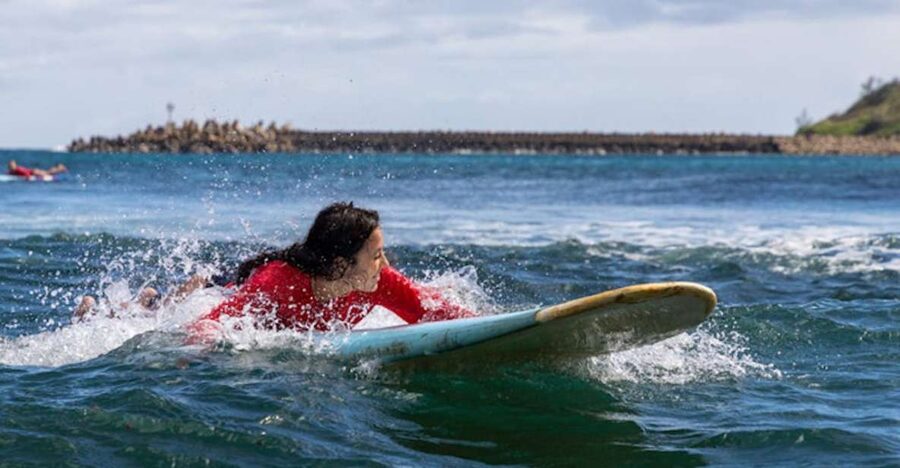
Reviewed · KAUAI SURF LESSONS & BOARD RENTALS
Kalapaki Beach: Surfing Lesson with Kauai Beach Boys
Surfing lessons can be intimidating.
Kalapaki Bay makes it easier, with protected water and trade winds that help keep waves manageable. I like that this is a small-group lesson capped at 6, so you get real coaching time, not a crowd. I also like the way the program sets you up with the right gear up front, including a board and rash guard, so you spend your energy learning instead of fussing. One thing to consider: even in a small class, you may do a lot of waiting between attempts while your instructor spots the best wave for you.
What you’ll do here is simple, focused, and practical.
You’ll practice paddling, balance, and how to position yourself for the ride, using expert guidance in the water. Coaching names you might run into include Christian and Nelson, and the vibe shows up in their style: calm, clear, and big on useful tips. The only possible drawback is pacing: an on-land briefing happens first, and then much of your water time can be board-time with the instructor pairing up to help you find the right wave.
In This Review
- Key things to know before you go
- Why Kalapaki Bay is a smart first surf choice
- How the 90 minutes usually plays out on the water
- Coaching quality: the calm, clear kind that builds confidence
- Included gear means you can focus on learning
- Ocean conditions you can actually work with
- Price and value: what you’re paying for at $103
- Who this surfing lesson is best for
- Realistic expectations: what success looks like
- Should you book this Kalapaki Bay surf lesson?
- FAQ
- What is the duration of the surfing lesson at Kalapaki Beach?
- How many people are in the surf class?
- What is the price per person?
- What’s included with the lesson?
- What language is the instruction offered in?
- Is this lesson good for children?
- Is there a weight limit?
- What are the cancellation terms?
Key things to know before you go
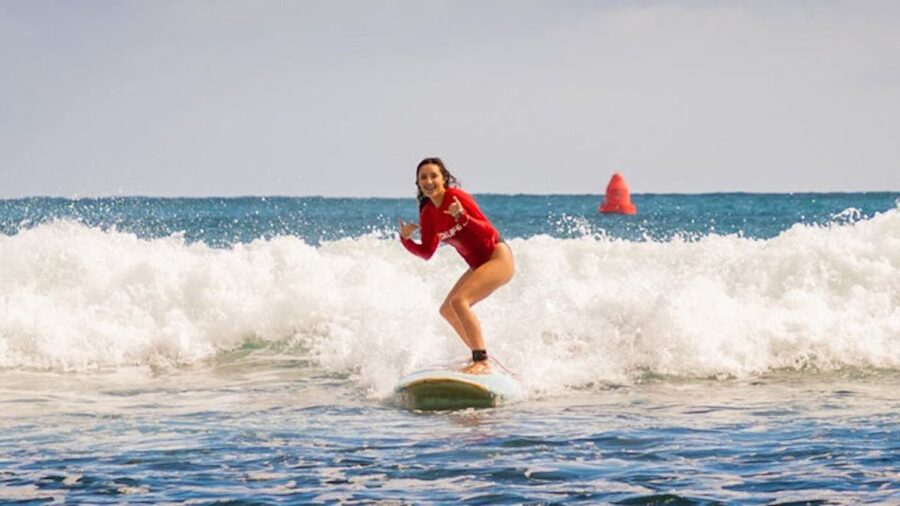
- Kalapaki Bay beginner setup: sheltered water and gentle trade winds make it a strong first-surf spot.
- Small classes (up to 6): easier attention and quicker corrections.
- You get the gear: surfboard plus rash guard, so you can focus on balance and paddling.
- Instructor-led wave finding: you may spend time on the board waiting while your coach places you on the right wave.
- Clear beginner coaching: instructors like Christian and Nelson are known for calm, step-by-step guidance.
Paddle out for one more surf lesson
- Po’ipu Surf Lesson★ 5.0 · 361 reviews
- Private Hanalei Sandy Bottom Surf Lesson on Kauai★ 5.0 · 339 reviews
- Kauai’s Ultimate Semi-Private Surf Lesson★ 5.0 · 33 reviews
- Kalapaki Beach: Surfing Lesson with Kauai Beach Boys★ 4.9 · 26 reviews
Why Kalapaki Bay is a smart first surf choice
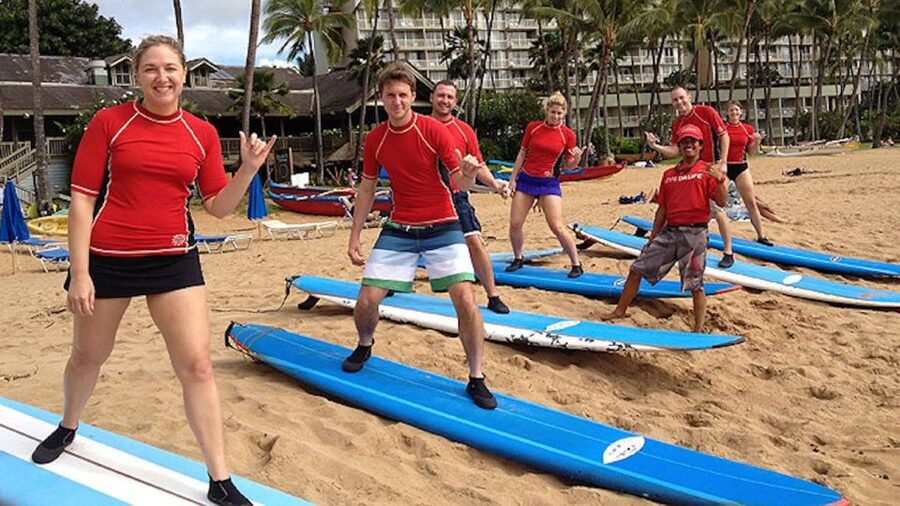
Kalapaki Bay is a reason to stop overthinking and just start paddling. The location is specifically chosen for learning: it’s protected by the bay, and the trade winds tend to keep conditions friendly enough for beginners. That matters, because your first goal isn’t doing tricks. Your first goal is staying steady, learning wave timing, and getting comfortable with what a board feels like under your feet.
The lesson also focuses on the foundations that transfer to every other surf spot you’ll visit in Hawaii later. That includes learning how to paddle efficiently, how to set your stance for balance, and how to position yourself so the wave is actually taking you somewhere instead of just hitting you and leaving you behind.
You’ll also get a sense of the local surfing culture around Kauai, not in a forced way, but through the way instructors talk about the ocean and what they want you to respect: basic technique, good decisions, and safe habits.
If you’re coming in as a first-timer, this kind of setting makes the experience feel achievable fast, which is the best kind of confidence.
How the 90 minutes usually plays out on the water
This is a 90-minute lesson, and the structure is built for beginners. You’ll start with instruction on land, then move into the ocean to practice. Expect an emphasis on the exact skills you need right away: paddling and balance. The goal is to help you understand what to do before you’re out there getting knocked around.
In practice, the flow can feel like this:
- Land briefing first: you’ll get introduced to the basics and how to handle your board.
- Then the water time: you’ll spend a lot of time on the board while you wait for the instructor to help you catch the right wave.
- Instructor helps you find waves: the coach may accompany you or pair guidance with you so you can get positioned properly.
One review pointed out something that matches what you can expect: you might not be continuously riding the entire session. Instead, you can end up doing more board-time early on, especially while the instructor works with individuals to find the best opportunity. That can be slightly frustrating if you’re imagining constant surfing.
Still, it’s also realistic. Surfing is not just standing up. It’s timing, wave selection, and effort management. Waiting isn’t wasted time if the coach is actively placing you with the right waves and correcting your technique in the moment.
A good way to think about it: your job is to stay ready and follow instructions quickly. The ocean brings the waves; the instructor helps you meet them at the right time.
Coaching quality: the calm, clear kind that builds confidence
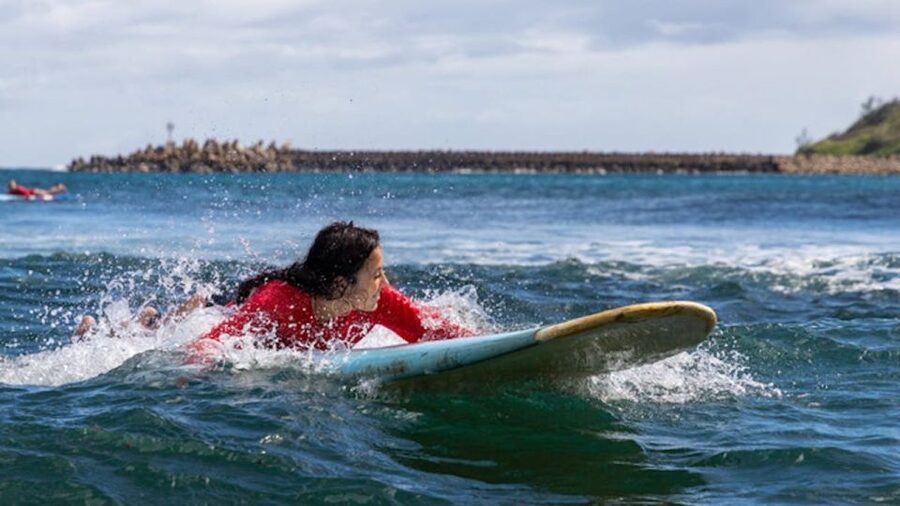
The biggest advantage of a small group (maximum 6) is that you don’t feel lost. You aren’t trying to process instructions meant for 20 people while also handling a board that doesn’t care how nervous you feel.
Instructors at Kalapaki Bay are known for a calm teaching style. Names you may see in sessions include Christian and Nelson. From the way they’re described, they focus on being clear and steady, then giving practical tips you can use immediately. That’s what turns a lesson from chaos into progress.
Here’s what you’ll want to pay attention to as you learn:
- Your paddling rhythm: you’re aiming for efficiency, not just flailing.
- Your board balance cues: small adjustments matter.
- Where the wave needs to meet you: timing can be the difference between a ride and a wipeout.
The best coaching doesn’t only tell you what to do. It also helps you avoid the most common beginner mistakes, like catching the wave too late, standing up before you’re stable, or pushing too hard when you really need control.
If you’ve ever taken a class where the instructor talks and you mostly watch—this isn’t that. It’s designed so you’re actually doing the things, even if some of that doing includes waiting for your turn.
Included gear means you can focus on learning
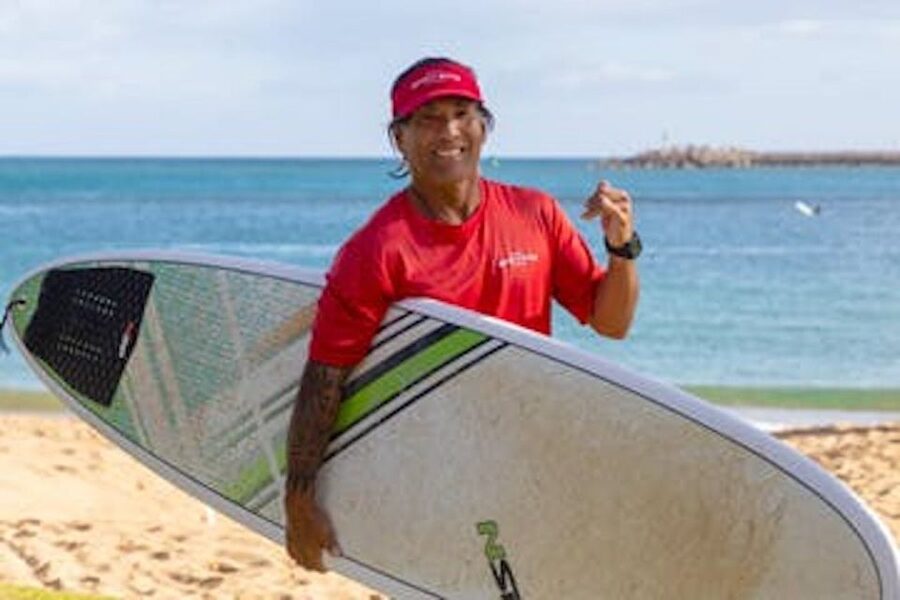
The lesson includes a surfboard and a rash guard. Even if you’re not bringing your own gear, you’ll have what you need to start. This is a big value point because surf equipment can be expensive to rent elsewhere, and last-minute rental lines are a travel buzzkill.
A rash guard also helps you stay comfortable. You’ll be in the water, and you’ll likely spend time contacting sand or board surfaces. The goal is to make the session about learning, not managing discomfort.
You’ll also use a leash and the basics of board handling as part of the lesson environment. The instructors guide you on how to work with your board so it feels like an extension of you instead of a random obstacle.
Practical tip: when you get your board, take a second to confirm how it feels under your feet. If something feels off, say so early. Small adjustments before you’re in the surf can save you frustration later.
A few more Kauai tours we have been out and rated



Ocean conditions you can actually work with
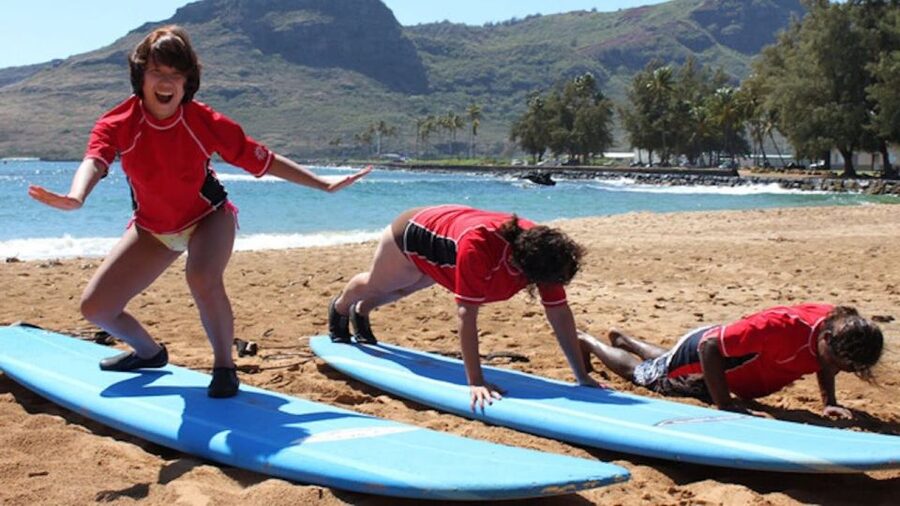
Kalapaki Bay is known for beginner-friendly conditions. The lesson description points to gentle trade winds and protection from the bay. What that means for you is less violent chop and a better chance of getting waves that match your skill level.
That’s important because surfing is a skill stack. If the water is too rough, your paddling breaks down. If you can’t paddle well, you can’t get into position. If you’re never in position, standing feels impossible. Friendly conditions help you build the right chain of cause and effect.
Also, pay attention to your instructor’s wave choices. Beginners often think surfing is about strength. It’s not. It’s about selecting the right moment, then executing smoothly.
A note about expectations: even with beginner-friendly waves, you might get dumped. That’s normal. One of the more honest takes on the session flow described frustration when additional waves carried them even after a surf mishap. Your best defense is not trying to fight every wave. Your best defense is staying calm, following instruction, and learning how to reset quickly.
Price and value: what you’re paying for at $103
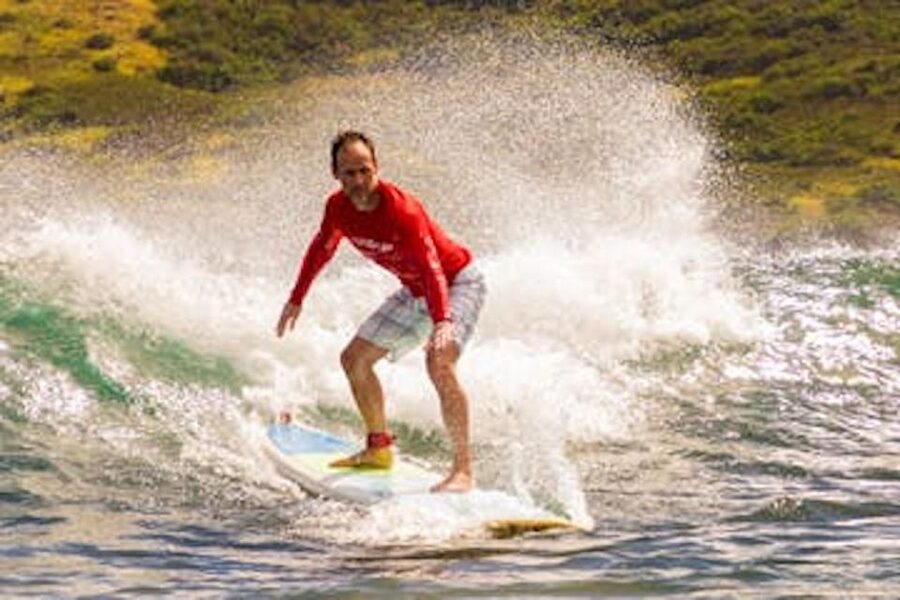
At $103 per person for a 90-minute lesson, you’re paying for a few things that matter: expert instruction, small group size, and included gear. The value comes from concentration—6 people or fewer means the instructor can actually manage your technique and give feedback that changes what you do next.
If you’re comparing this to doing a generic surf rental with no instruction, the difference is huge. With a lesson, you’re not just trying random standing attempts. You’re building paddling and balance fundamentals, and the instructor is shaping your learning in real time.
Is it “cheap”? No. But for a first-timer who wants progress instead of punishment, it’s a fair price. Especially since the lesson is designed specifically around beginners and runs 90 minutes—enough time to learn, practice, and get a feel for the ocean rhythm.
One more value angle: if you’re visiting Kauai, you’re also paying for the location. Kalapaki Bay’s sheltered conditions help make your learning safer and more productive, which is worth money even if you could theoretically surf elsewhere.
Who this surfing lesson is best for
This lesson is designed for beginners, but it’s also picky about comfort and safety.
It’s not suitable for:
- Children under 10
- People over 250 lbs (113 kg)
That tells you the class is structured around manageable loads and ocean conditions that work for the instructors and the group setup.
It’s a great fit if:
- You want a first surf lesson without a big crowd
- You like clear instruction and a calm teaching vibe
- You’re okay with practicing foundations (paddling and balance) instead of expecting nonstop rides
It can also work for adults who are fit and curious, even if you haven’t surfed before. A first lesson is often easier when you treat it like skill training, not a performance.
Realistic expectations: what success looks like
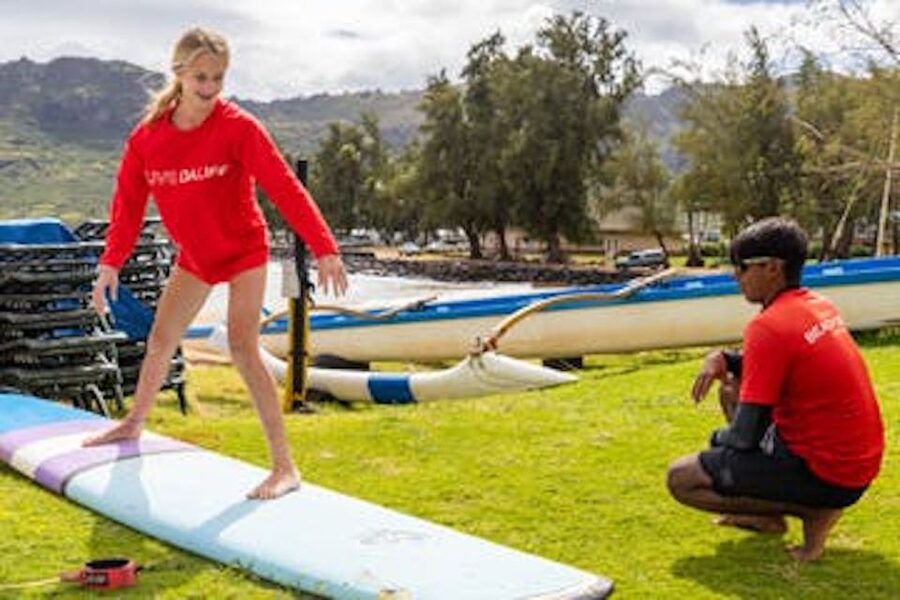
Your definition of success on a first surf lesson matters. If your goal is to stand up and ride once, you’ll probably have a good time. If your goal is to get multiple long rides without falling, you may end up disappointed—because beginners typically spend time learning positioning and balance.
The most practical mindset is: success is getting better at the steps. You’ll feel it when:
- Your paddling gets smoother
- You catch waves with better timing
- Your first stance looks steadier
- You understand what the coach is correcting
And even if you don’t ride as much as you hoped, the real win is you leave knowing what to do next time. Most people don’t need a miracle. They need technique cues, repetition, and the confidence that they can try again.
Should you book this Kalapaki Bay surf lesson?
I’d book it if you want a structured beginner experience in a spot built for learning. The small group size, included gear, and calm, clear coaching style make it a strong first step. If you’re worried you’ll be bored waiting, know that some waiting is part of the process—your instructor is using guidance to help you catch the right waves, not just tossing you into random surf.
I would skip it or choose another option if:
- You’re under 10 or over 250 lbs
- You really need nonstop riding for the lesson to feel worth it
- You prefer an activity format where you can practice the same thing continuously without board-time gaps
FAQ
What is the duration of the surfing lesson at Kalapaki Beach?
The lesson lasts 90 minutes.
How many people are in the surf class?
The class is a small group, limited to 6 participants.
What is the price per person?
The price is $103 per person.
What’s included with the lesson?
You get an expert instructor-led activity, a surfboard, and a rash guard.
What language is the instruction offered in?
Instruction is in English.
Is this lesson good for children?
No. It is not suitable for children under 10 years old.
Is there a weight limit?
Yes. It is not suitable for people over 250 lbs (113 kg).
What are the cancellation terms?
You can cancel up to 24 hours in advance for a full refund.
More Workshops in Kauai

More Tour Reviews in Kauai






Catch a Few More Waves
Just Reviewed: The Newest Kauai Tours





Kauai Surf Lessons & Board Rentals, compared.
 ★ 5.0Po’ipu Surf LessonFrom $89361 reviews
 ★ 5.0Private Hanalei Sandy Bottom Surf Lesson on KauaiFrom $118339 reviews
 ★ 5.0Kauai’s Ultimate Group Surf LessonFrom $121110 reviews
 ★ 5.0Kauai’s Ultimate Semi-Private Surf LessonFrom $19133 reviews
 ★ 5.0Semi Private Surf LessonsFrom $17523 reviews
 ★ 5.0Group Surf Lesson at Kalapaki BeachFrom $10318 reviews
 ★ 5.0Kauai’s Ultimate Private Surf LessonFrom $31811 reviews
 ★ 5.0Kaua’i Surfboard RentalsFrom $306 reviews
Browse the lists this tour appears in