
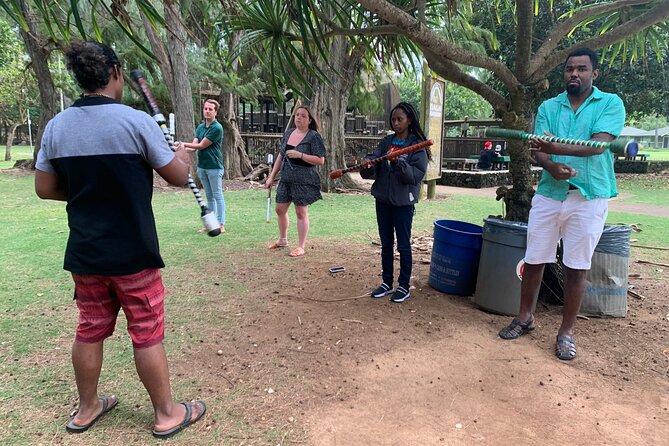
Reviewed · KAUAI LUAUS & FIRE SHOWS
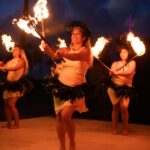
Samoan FireKnife Experience On Kaua’i
Fireknife lessons feel closer than a show. This interactive Samoan workshop on Kauai puts you in motion, with cultural context and real instruction, not just watching. I especially like the talk-story history at the start and the fact that you get hands-on practice right away. One thing to consider: it’s weather-dependent and it’s designed as a moving workshop, so plan for sweat, wind, and getting down to practice stance and footwork.
The session is led by Polynesian performer Pomaikaʻi, who’s been dancing fireknife for over 15 years. You’ll begin with origins and meaning, then move into learning basic spins and footwork using a practice stick—no experience needed. If you’re ready at the end, you may get a chance to try a real fireknife safely under guidance, which is the kind of moment that feels personal because you’re actually doing it.
This is also not a luau. There’s no dinner or food service, and the workshop runs about an hour at Lydgate Beach Park near Leho Dr in Lihue. It also needs at least 4 participants to run (otherwise you’ll be offered a reschedule or a full refund), and the group is capped at 25.
In This Review
- Key points before you go
- Why Lydgate Beach Park works for Fireknife training
- The 1-hour flow: talk-story, practice stick moves, then fire
- Cultural context you’ll actually remember
- What you learn with the practice stick (and how to prepare your body)
- The real-fire moment: worth it, and why safety is part of the value
- Price and value: is $125 a good use of your time on Kauai?
- Who should book this (and who might skip it)
- Timing, weather, and how to plan your day
- The teaching team experience: Pomaikaʻi and helpful support
- Should you book the Samoan Fireknife workshop on Kauai?
- FAQ
- Is this experience a luau or a training workshop?
- How long does the Samoan Fireknife experience take?
- Do I need prior dance or fireknife experience?
- What should I bring?
- Is food or dinner included?
- What happens if weather is bad or there aren’t enough participants?
Key points before you go
- Workshop, not a luau: You’re learning and participating, and there’s no food included.
- Start with a practice stick: Spins and footwork first, so you can build coordination fast.
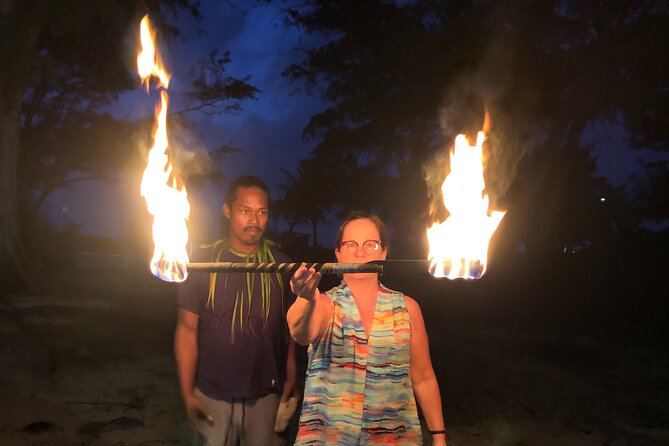
- Optional real-fire attempt: If you feel ready, you can try a real fireknife under close instruction.
- Pomaikaʻi leads the cultural talk-story: You’ll get meaning and origins, not just movements.
- Lydgate Beach Park location: A clear, central meeting place in Lihue (Leho Dr area).
- Small group limits: Runs only if at least 4 people show; no huge crowd energy.
Find another luau and fire show
- Kauai: Luau Kalamaku with Buffet Dinner and Show★ 4.5 · 1,620 reviews
- Luau Kalamaku on Kauai with Manor House 4-Course Dinner & Show★ 4.5 · 193 reviews
- Kauai: VIP Manor House Dinner & Luau Kalamaku Show★ 4.6 · 85 reviews
- Ahi Uila Fire Show and Dinner on Kauai★ 4.0 · 52 reviews
Why Lydgate Beach Park works for Fireknife training
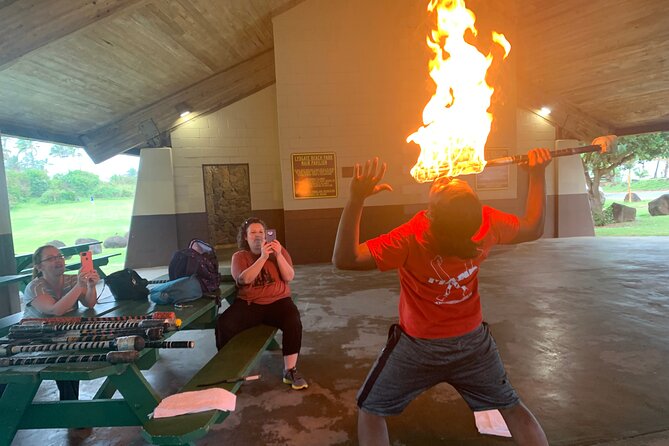
Lydgate Beach Park is a practical choice for this kind of class because it’s open, easy to find on the east side of Kauai, and set up for active work. Meeting near Leho Dr in Lihue also helps you fit this into a day without fighting for parking or timing a complicated multi-stop route.
You’re there for an hour-ish session, not a long evening event. That makes it easier to pair with beach time, a meal in town (since this workshop doesn’t include food), or another short activity the same day.
The other big reason this location fits: it lets the fire performance happen in a controlled, outdoor setting. Since the experience is weather-dependent, the park’s outdoor setup also means you’ll be paying attention to wind and conditions in real time.
The 1-hour flow: talk-story, practice stick moves, then fire
The workshop starts with a talk-story session. This is where Pomaikaʻi frames Fireknife dancing in Samoan culture—origins, meaning, and why it’s more than a circus-style trick. For me, that matters because fireknife feels dramatic, but it lands better when you understand what it represents.
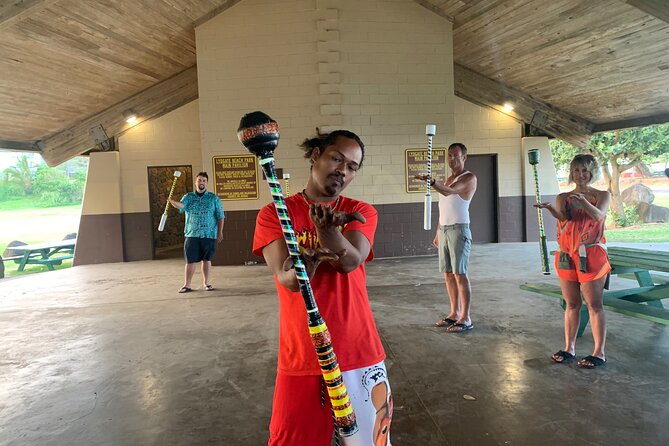
After the talk-story, you’ll learn movements using a practice stick. Expect basics like:
- spins you can control,
- footwork that keeps you stable,
- simple combos that help you remember sequences.
The good news is the class is designed so no experience is necessary. The pacing tends to be built for real learning, not just quick entertainment. That’s also why a practice stick is important: you get the muscle memory first, without the pressure of flames.
Then comes the live demo and the hands-on portion that can include an opportunity to try a real fireknife. The key phrase here is under my guidance (meaning close supervision). You’re not supposed to treat fire as a thrill you chase on your own—you’re learning technique and safety first, and the fire moment is the payoff for participation and readiness.
The whole thing is roughly an hour. That’s long enough to learn something real, but short enough that it doesn’t eat your entire day on Kauai.
Cultural context you’ll actually remember
What makes this workshop feel more authentic than a typical show is that you’re not just watching from the outside. You get the cultural background before the movement training, so when you learn spins and footwork, you’re connecting it to meaning and tradition.
Pomaikaʻi is specifically positioned as a teacher and performer—born and raised on Kauai, performing fireknife across the island, and sharing the tradition in an up-close, hands-on format. That “teacher-performer” mix shows up in how the session is structured: talk first, then practice, then performance.
In practice, this means you’ll be able to talk about what you learned beyond the flames. People often remember the fire, sure—but the part that sticks with you later is the reason behind the dance and the care taken with technique and respect.
If you’ve been doing the usual rotation of beaches, lookouts, and big-ticket shows, this kind of class gives you a different angle on Polynesian culture: active, guided, and focused.
What you learn with the practice stick (and how to prepare your body)
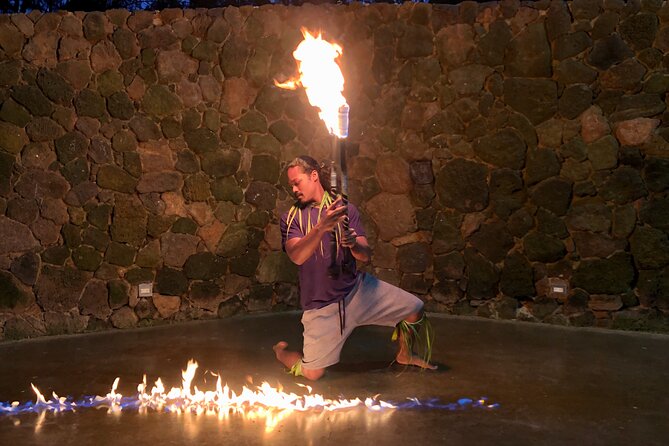
Using a practice stick early is a smart setup. It lets you learn control—how to start a spin, how to plant your feet, and how to keep your body aligned—before you worry about managing heat and fire.
You should think of the training as coordination work. You’re not being graded like a competition, but you are expected to move. Closed-toe shoes help because you’ll be standing, stepping, and practicing footwork. Comfortable clothes matter because you’ll likely be bending, turning, and adjusting your stance.
Here’s how to get ready in a simple, practical way:
- Wear comfortable clothes you can move in
- Bring closed-toe shoes for traction
- Bring a water bottle
- Be ready to try, even if your coordination feels shaky at first
One more reality check: the workshop is outdoors. Wind and uneven ground can affect spins. You don’t need special athletic ability—just a willingness to listen and adjust.

The real-fire moment: worth it, and why safety is part of the value
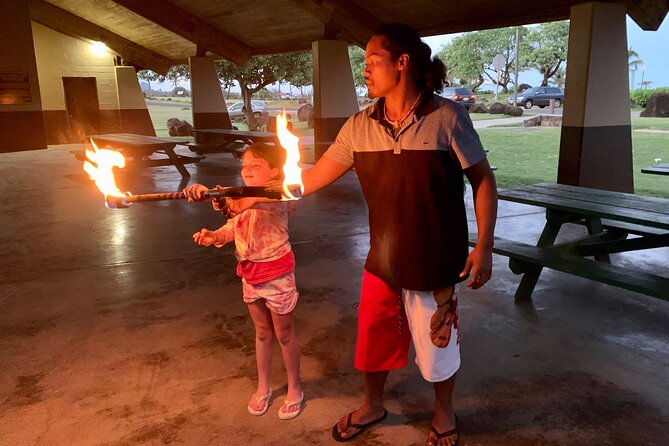
The workshop doesn’t just end with a demo. There’s a guided chance to try real fire, but it’s conditional on you feeling ready. That’s important for two reasons.
First, it protects the experience for everyone. When fireknife is treated like a group training moment, the instructor can keep everyone safe while still giving participants a meaningful goal.
Second, it makes the moment feel earned. If you’ve practiced with the stick and learned basic moves, the fireknife try becomes a “step up,” not a random thrill. You’ll be able to connect what you did earlier to what you’re doing now.
From a value standpoint, that real-fire try is why this isn’t just a culture talk. It’s a skill-based experience with a signature payoff—one that many people would otherwise only see at a formal show.
Price and value: is $125 a good use of your time on Kauai?
At $125 per person for about one hour, you’re paying for three things at once: instruction, cultural teaching, and access to a rare type of performance practice.
If you compare it to a typical luau ticket, you’re not paying for dinner or a staged production. But you are paying for personalized coaching and the chance to participate. The workshop format matters because it creates active learning time rather than passive viewing.
Also, the group size cap of 25 keeps it from turning into a big crowd event where your participation gets diluted. And the workshop needs at least 4 people to run, which suggests the format is intended to work in a small-enough group for real teaching.
My take: this is good value if you like hands-on activities and want something more personal than watching from the outside. If you only want a sit-and-watch show and don’t want to move, you might feel the price more than the reward.
Who should book this (and who might skip it)
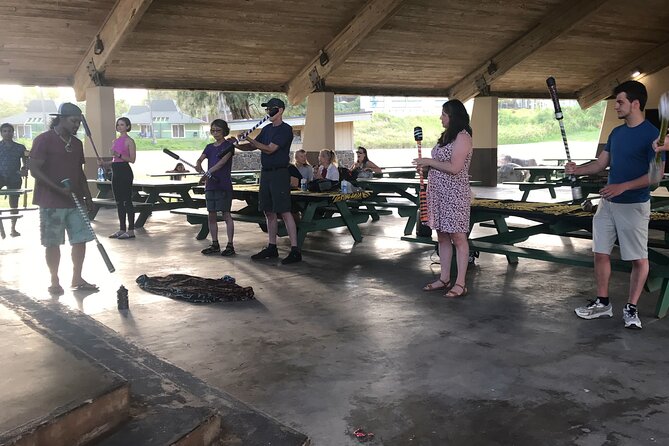
This workshop fits best if you want an active, culture-forward activity that you can’t easily replicate elsewhere. It’s especially good for:
- people who feel tired of only beach time,
- families who want a shared activity (especially since the instruction is designed for beginners),
- couples or friends who like learning something practical and memorable in one afternoon block.
It also works well as a “first step” into Polynesian performance, because you get context plus movement training rather than only a performance.
If you don’t enjoy moving—if you prefer to sit still for hours—or if you’re dealing with mobility issues that make footwork and turning difficult, you may want to choose a different kind of cultural activity. This one is built around participation.
Timing, weather, and how to plan your day
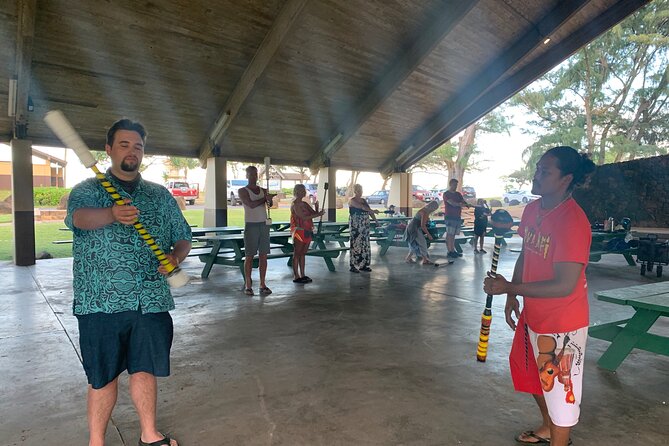
The workshop runs in daytime hours (listed as Monday through Thursday, 10:00 AM to 2:00 PM for the date range shown). Practically, that means it’s a great mid-morning or early afternoon slot.
Weather matters here. If conditions aren’t suitable, the experience can be canceled and you’ll be offered a different date or a full refund. Since fire events are involved, it’s smart to treat this like a real plan—not something to stack right before a flight.
Also remember:
- It’s about an hour long, and it ends back at the meeting point.
- Confirmation comes at booking, and it uses a mobile ticket.
- Service animals are allowed.
- It’s near public transportation, so you’re not locked into a car-only plan.
A small but real tip: wear your most comfortable closed-toe shoes and plan to be outside for the whole session. Once you factor in wind and your own comfort level, you’ll have a better time than going in expecting a casual stroll.
The teaching team experience: Pomaikaʻi and helpful support
The heart of the class is Pomaikaʻi, the Samoan fireknife performer leading the talk-story and instruction. You’ll feel the focus shift from story to technique as the stick training starts.
On some sessions, supportive performers may help with guidance and demos. In past experiences tied to this activity, names like Jordan and Mason came up as part of the hosting and teaching support, and the tone people describe is patient and encouraging—exactly what you want when you’re learning spins and trying not to step on your own feet.
Even if you’re nervous at first, that kind of support matters. It helps you relax into the moves, follow cues, and (if you’re ready) safely attempt real fire.
Should you book the Samoan Fireknife workshop on Kauai?
Book it if you want something active, cultural, and hands-on in about an hour. For the price, you get cultural context, beginner-friendly practice, and a real-fire moment that isn’t available at most tourist stops. The outdoor setting at Lydgate Beach Park also makes it easy to fit into an otherwise beach-heavy Kauai day.
Skip it if you only want to watch, don’t want to move, or you’re sensitive to weather changes. Since it’s weather-dependent and requires at least 4 participants to run, you’ll want a bit of flexibility in your schedule.
If you’re the type who likes learning skills and hearing the meaning behind them, this is the kind of Kauai experience that sticks with you longer than another photo at a viewpoint.
FAQ
Is this experience a luau or a training workshop?
It’s a workshop, not a luau. You’ll get cultural background and hands-on instruction, and it’s not set up with dinner or food service.
How long does the Samoan Fireknife experience take?
The duration is about 1 hour.
Do I need prior dance or fireknife experience?
No. You’ll start with basic movements using a practice stick, and it’s designed for people with no experience.
What should I bring?
Bring comfortable clothes, closed-toe shoes, and a water bottle.
Is food or dinner included?
No. Dinner and beverages are not provided.
What happens if weather is bad or there aren’t enough participants?
The experience requires good weather. If it’s canceled due to poor weather, you’ll be offered a different date or a full refund. If it doesn’t meet the minimum number of travelers, you’ll also be offered a different date/experience or a full refund.
More Tour Reviews in Kauai

Luaus and Fire on the Sand
Just Reviewed: The Newest Kauai Tours


Kauai Luaus & Fire Shows, compared.
 ★ 4.5Luau Kalamaku with Buffet Dinner and ShowFrom $1791,620 reviews
 ★ 4.5Luau Kalamaku with Buffet Dinner & ShowFrom $179932 reviews
 ★ 4.5Luau Kalamaku on Kauai with Manor House 4-Course Dinner & ShowFrom $259193 reviews
 ★ 4.6VIP Manor House Dinner & Luau Kalamaku ShowFrom $25985 reviews
 ★ 4.0Ahi Uila Fire Show and Dinner on KauaiFrom $10552 reviews
 ★ 4.0Luau Kalamaku – Premium Seating, Dinner & ShowFrom $20717 reviews
 ★ 5.0Ahi Uila Fire Show with Dinner OptionFrom $1045 reviews
Browse the lists this tour appears in